
Presenting Data Analytics:
Make Analytics Meaningful to
Any Audience
workshop 2604
How You’ll Benefit:
- Transform technical or analytical data into engaging, easy-to-understand business messages.
- Apply proven communication structures to move from simply “showing data” to influencing decisions.
- Adapt complex information for different audiences using relatable language, metaphors, and visuals.
- Build data narratives that show both the need for change and the path forward.
- Deliver clear, confident, and persuasive data-driven presentations.
Who Should Attend:
- Data and business professionals who communicate analytics or insights to non-technical audiences.
- Engineers, project managers, and analysts who present data findings to leaders or stakeholders.
- Rising leaders who must influence decisions using data storytelling.
- Professionals in finance, operations, and sales who report on performance metrics or forecasts.
Program overview:
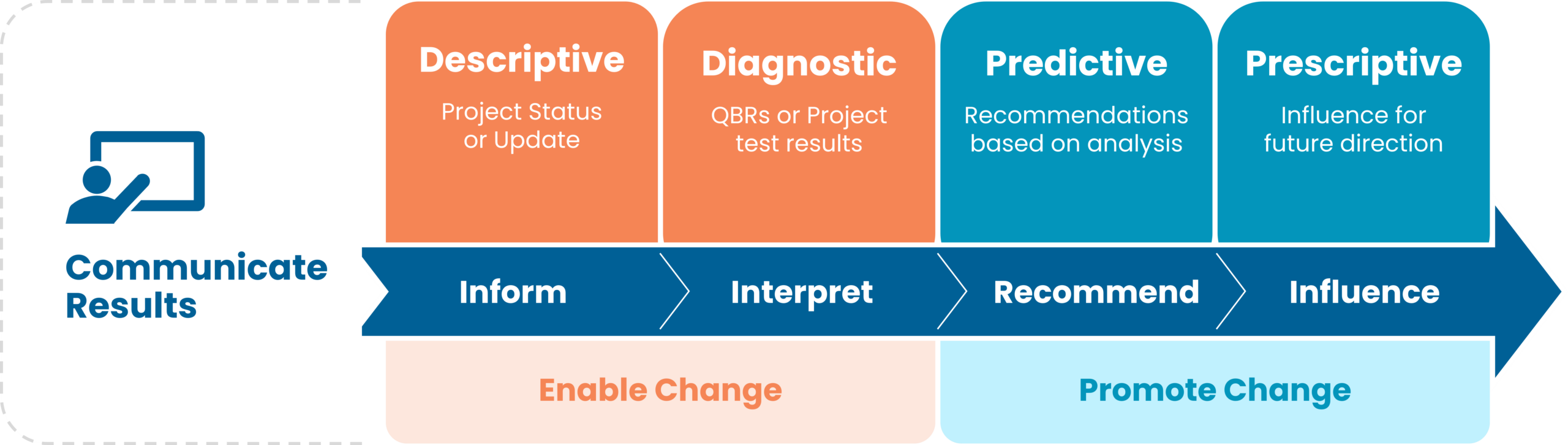
Presenting data effectively requires more than charts and numbers—it requires storytelling that connects logic with emotion. This workshop helps professionals transform complex analytics into clear, compelling business messages that engage their audience and drive decisions. Participants learn how to plan their data stories, understand their audience’s data language, and structure messages that highlight insights and action. Using tools like the 4 Phases of Data Messaging, Business Narrative Model, and translation techniques (conversion, metaphor, zooming, and scale models), participants gain the confidence to present data that informs, persuades, and inspires change. The session blends instruction, guided practice, and interactive exercises using realistic case studies and business examples.
Tools You’ll Receive:
- 4 Phases of Data Messaging (Descriptive, Diagnostic, Predictive, Prescriptive) – Framework for structuring a message from insight to action.
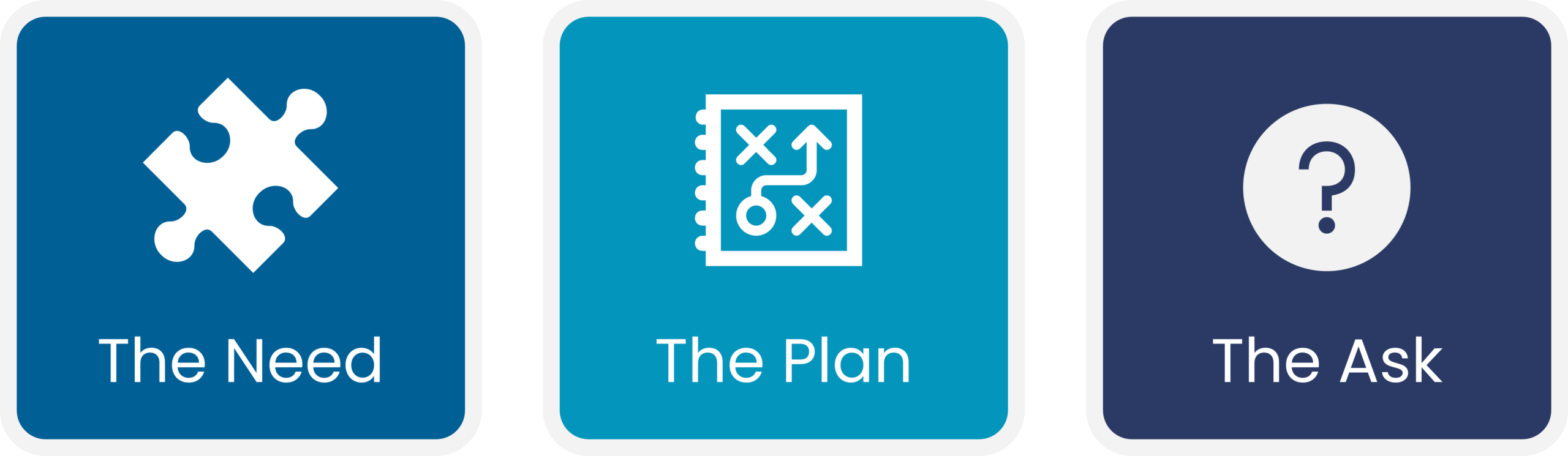
- Business Narrative Model – A five-part model linking “the need to change” with “the proposed solution.”
- Know Your Audience Framework – Understand what your audience knows, feels, and values to tailor your message.
- Simple Conversion – Translate data into units meaningful to your audience.
- Metaphors – Use relatable comparisons to simplify complex topics.
- Zooming – Change data perspective by scaling up or down for clarity and emotional impact.
- Scale Models – Blend conversion, metaphor, and zooming to make large numbers relatable.
- Message Models (Good–Bad–New, Situation–Action–Results, What–So What–Now What) – Practical templates for organizing and delivering data messages.
Concepts we’ll teach you (Objectives):
- How to analyze and tailor data messages for audience relevance.
- How to use narrative structure to communicate data insights persuasively.
- How to simplify complex data using translation tools and visuals.
- How to build and deliver data stories that influence change and decision-making.
- How to evaluate and refine presentation content for clarity, connection, and impact.
Agenda
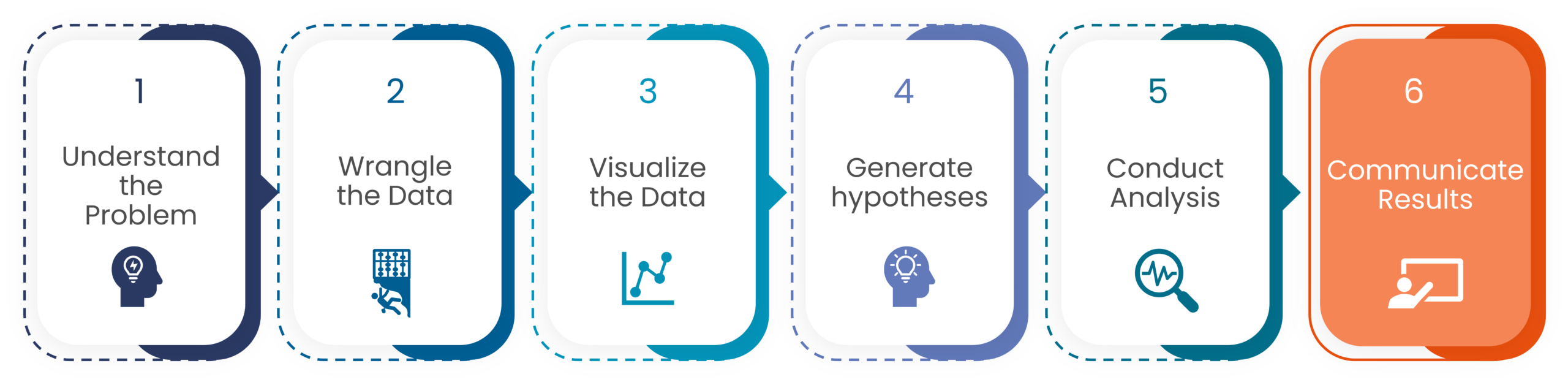
Topic 1: Understanding the Challenge
Topic 2: Planning the Message
Topic 3: Translating Data for Understanding
Topic 4: Influencing Through Storytelling
Topic 5: Delivering with Clarity and Confidence
Topic 6: Implementation and Application
Activities:
- Audience Analysis Exercise- Identify the audience’s knowledge, data comfort, and decision priorities to tailor your message effectively.
- Message Planning and Structuring- Use the 4 Phases of Data Messaging and Business Narrative Model to organize insights into clear, actionable sequences.
- Data Translation Practice- Apply four translation tools — Conversion, Metaphor, Zooming, and Scale Models — to make complex data simple and relatable. They rewrite overly technical data points into relatable, memorable statements.
- Storytelling Application-Build a short data story using the Business Narrative Model to link the need for change, current state, and path forward.
- Model Selection Workshop- Learners choose between Good–Bad–New, Situation–Action–Result (SAR), and What–So What–Now What to organize their presentation content. They apply the chosen model to real business data or case examples provided in the workbook.
- Practice and Peer Feedback- Choose and apply a structure (Good–Bad–New, SAR, or What–So What–Now What) to organize real data messages.
- Action Planning and Reflection- Deliver a short data presentation and receive feedback on clarity, storytelling, and audience connection.
Delivery Format:
- In-Person or Virtual
Duration & Structure:
- 7 hour
- Up to 10 participants
Targeted Reinforcement:
- Short Cut Card (Included)
- Quick reference guide of the tools and tips learned in class.
- iSpeak U Tool Library (Included)
- Access to the iSpeak U library with tools and examples.
- AI iSpeak Coach for 30 days (Additional Charge)